

Cricket betting looks confusing from the outside. Numbers like 1.85 and 2.10 flashing next to team names, terms like “back,” “lay,” and “session,” rates changing after every ball for a beginner, it can feel like a language you were never taught.
The good news: the language is small. Once you understand how odds work and what the two or three main bet types actually mean, everything else on the exchange makes sense. This guide takes you from zero to placing your first informed bet how odds are read, what they tell you about probability, how back and lay betting works, what session markets are, and the money-management rules that separate players who last from players who burn out in a week.
One thing before we start: betting involves real financial risk, and no guide this one included can make winning certain. What a guide can do is make sure you understand exactly what you’re doing with every rupee you place. Let’s get into it.
Table of Contents
How Cricket Betting Works: The Exchange Model
Most modern cricket betting in India happens on an exchange, and understanding this changes how you see everything else.
On a traditional bookmaker, you bet against the house. The bookmaker sets the odds, takes your bet, and profits when you lose. On an exchange like cricbet99, you’re effectively betting against other players. The platform matches people who think India will win with people who think India won’t, and the odds float based on where the money is going — much like share prices on a stock market.
This is why exchange odds move ball by ball during a live match. A wicket falls, and the batting team’s odds drift out. A big over gets hit, and they shorten. You’re watching thousands of opinions update in real time.
To participate, you need an account either register on the website or get a cricbet99 ID through WhatsApp plus a small deposit to fund your bets. That’s the entire entry requirement.
Understanding Cricket Odds: What the Numbers Actually Mean
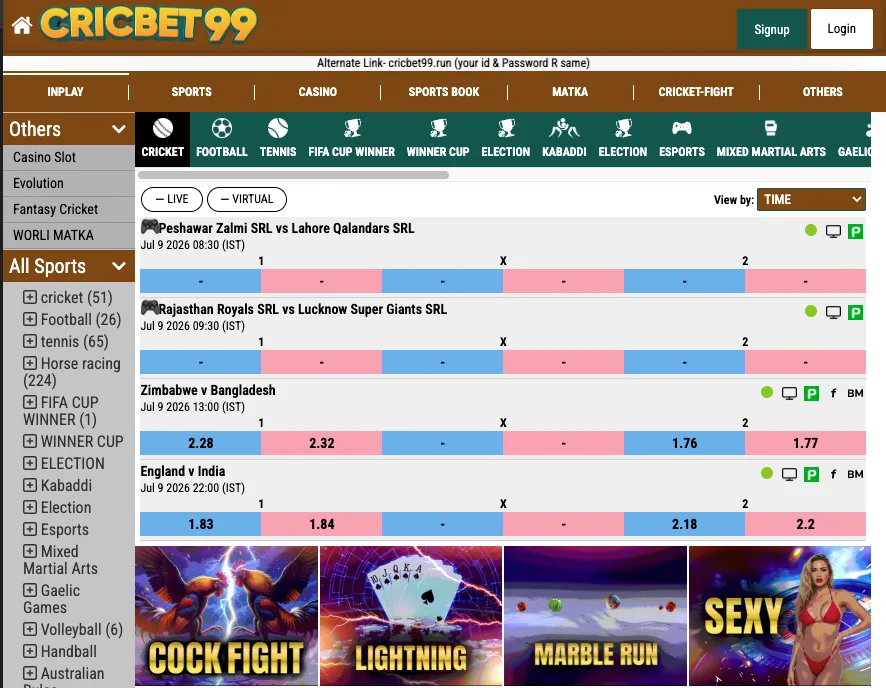
Odds answer two questions at once: how likely is this outcome, and how much do I win if it happens?
Indian exchanges display decimal odds. The rule is simple:
Your total return = stake × odds
Say India are at 1.80 to beat Australia, and you bet ₹100:
- Total return if India win: ₹100 × 1.80 = ₹180
- Profit: ₹180 − ₹100 stake = ₹80
- If India lose: you lose your ₹100 stake
Now Australia at 2.20 with the same ₹100:
- Total return if Australia win: ₹100 × 2.20 = ₹220
- Profit: ₹120
Notice the pattern: lower odds = more likely outcome, smaller profit. Higher odds = less likely outcome, bigger profit. The favourite always carries short odds; the underdog carries long odds. There is no free money anywhere on the board — every extra rupee of potential profit is payment for extra risk.
Odds Are Probability in Disguise
Here’s the step most beginners never learn, and it’s the single most useful idea in this entire guide:
Implied probability = 1 ÷ decimal odds
- Odds of 1.80 → 1 ÷ 1.80 = 0.55, i.e. the market thinks this outcome has roughly a 55% chance.
- Odds of 2.20 → 1 ÷ 2.20 = 0.45, roughly a 45% chance.
- Odds of 4.00 → 25% chance.
- Odds of 1.10 → 91% chance.
Why does this matter? Because betting well is not about picking winners — it’s about finding odds that are wrong. If you genuinely believe a team has a 60% chance of winning but the odds imply only 50%, that’s a bet worth considering. If the odds imply 70% and you think it’s a coin flip, walk away, no matter how much you like the team. Every serious bettor thinks in probabilities first and rupees second.
Back vs Lay: The Two Sides of Every Exchange Bet
This is the concept that makes an exchange different from anything else, and it’s simpler than it sounds.
Backing is the normal bet you already understand: you’re betting that something will happen. Back India at 1.80, India win, you profit.
Laying is the opposite: you’re betting that something will NOT happen. When you lay India, you profit if anyone but India wins (including a tie or the opponent winning). You’re playing the role the bookmaker traditionally plays — accepting someone else’s back bet.
The catch with laying is liability. When you lay ₹100 at odds of 1.80:
- If India lose, you win the backer’s stake: ₹100 profit
- If India win, you pay out their winnings: ₹80 liability (stake × (odds − 1))
Lay at higher odds and the liability grows fast — laying ₹100 at 4.00 risks ₹300 to win ₹100. Always check the liability figure the exchange shows before confirming a lay bet; it’s the number you can actually lose.
Why lay at all? Two reasons. First, sometimes “this team won’t win” is a much easier judgment than picking who will — in a three-way T20 group scenario, for example. Second, backing and laying the same outcome at different odds as the match swings is how experienced players lock in profit regardless of the final result — a technique called trading. That’s an advanced move; for now, just understand both buttons.
Session and Fancy Markets: Cricket’s Unique Bets

Match odds are only half the exchange. The other half — and where Indian players spend most of their time — is session betting, also called fancy markets.
A session market asks a small, specific question about a slice of the match:
- How many runs in the first 6 overs? The market might show 48-50, meaning you can bet the total will be under 48 or over 50.
- Runs in the next over?
- A batsman’s total runs — will Kohli score over or under 34.5?
- Fall of next wicket — will the next wicket fall before or after the team reaches 120?
Session rates update after literally every ball, which is why they’re thrilling — and why they’re dangerous for the undisciplined. A session bet resolves in minutes, tempting you into dozens of small bets that quietly add up. Treat sessions with the same probability thinking as match odds: is the number the market is showing actually wrong, or does it just feel wrong because you’re watching your favourite batsman?
Types of Cricket Bets You’ll See
Beyond match winner and sessions, a typical match card offers:
- Match winner — the core market; who wins this game.
- Toss winner — a pure 50/50; the odds tell you exactly what a coin flip pays.
- Top batsman / top bowler — who scores the most runs or takes the most wickets for a team.
- Total match runs / boundaries / sixes — over/under lines on match aggregates.
- Tied match — a long-odds special, occasionally interesting in T20s.
- Series winner — a longer-term bet across a whole series.
- Tournament outright — backing a team to win the IPL or World Cup weeks in advance.
A useful beginner’s rule: stick to match winner and one or two session types until reading odds feels automatic. Every market you add multiplies the ways to lose money before you’ve learned to evaluate one properly.
Placing Your First Bet
- Get your account. Register directly or get your cricbet99 ID on WhatsApp — either way takes about 5 minutes.
- Deposit your budget. Minimum ₹200 via UPI or bank transfer. Deposit only the amount you decided on before opening the site (more on this below).
- Login on the website or the app — the app is smoother for live odds.
- Open a match and read the odds board. Convert the main odds to implied probability in your head (1 ÷ odds). Do you agree with the market?
- Choose back or lay, enter your stake, and check the profit/liability figure shown before confirming.
- Confirm — and then leave it alone. Constantly reacting to every ball is how disciplined plans die.
Reading a Match Before You Bet
Odds reflect the market’s opinion. Your edge, if you have one, comes from forming a better opinion. The factors that actually move cricket matches:
The pitch. Is it a flat road where 200 is chaseable, or a turning track where 150 defends itself? Venue history tells you more than team reputation.
The toss. At some venues, especially with evening dew in T20s, winning the toss and chasing is a genuine advantage. Check whether odds have already adjusted after the toss — they usually have.
Team news and form. A key bowler rested, an opener returning from injury, a keeper in poor form — lineup details matter more in cricket than almost any sport because eleven individuals carry such distinct roles.
Weather. Rain doesn’t just threaten abandonment; shortened matches and DLS calculations dramatically change which team benefits.
Recent head-to-head at the venue, not overall. Australia’s record in Australia says little about their odds in Chennai.
None of this guarantees anything — cricket’s charm is that a single over can flip everything. But betting with these factors considered beats betting on jersey loyalty every single time.
Bankroll Management: The Rules That Keep You in the Game
This is the least exciting section and the most important one. Read it twice.
Rule 1 — Set your bankroll before you start. Decide a fixed amount per week or month that comes from your entertainment budget — money whose complete loss would not affect your rent, food, family, or loans. That number is your bankroll. When it’s gone, the week is over.
Rule 2 — Bet small percentages. A standard guideline: no single bet larger than 2–5% of your bankroll. On a ₹2,000 bankroll, that’s ₹40–₹100 per bet. This feels slow. It’s also the only way variance doesn’t wipe you out on a bad night — and bad nights are mathematically guaranteed.
Rule 3 — Never chase losses. The urge to double the next stake to “win it back” is the most predictable and most destructive pattern in all of betting. A loss is the cost of the entertainment. The session ends; you don’t dig.
Rule 4 — No borrowed money, ever. If depositing requires a loan, credit, or borrowing from a friend, the correct stake is zero.
Rule 5 — Track every bet. A simple note of stake, odds, market, and result. Most people who think they’re “about even” are down; the record keeps you honest with yourself.
If you notice yourself hiding bets from family, betting to escape stress, or feeling restless when not playing — stop and read our Responsible Gaming page. Deposit limits and self-exclusion exist for exactly this, and using them early is strength, not failure.
Common Beginner Mistakes to Avoid
- Betting with the heart. Backing India in every match because you’re Indian isn’t a strategy; the market already knows India are good, and the odds are priced accordingly.
- Ignoring implied probability. If you can’t say what percentage chance the odds imply, you don’t yet know what you’re buying.
- Overtrading sessions. Twenty impulsive ₹50 session bets is ₹1,000 gone in an evening, ten rupees at a time.
- Laying without checking liability. The stake is not what you risk on a lay bet — the liability is.
- Betting every match. No opinion means no bet. The best players skip most games.
- Increasing stakes when winning. A hot streak is variance, not skill confirmation. Percentages stay fixed.
FAQs About Cricket99 ID
What do cricket odds of 1.80 mean?
A ₹100 bet returns ₹180 if it wins ₹80 profit plus your stake back. It also implies the market gives that outcome roughly a 55% chance (1 ÷ 1.80).
What is the difference between back and lay?
Backing bets that an outcome will happen; laying bets that it won’t. Lay bets carry liability of stake × (odds − 1), so always check the liability figure before confirming.
What is session betting in cricket?
Bets on small slices of the match runs in the first 6 overs, a batsman’s total, the next wicket’s timing with over/under rates that update ball by ball.
How much money do I need to start?
The minimum deposit is ₹200. Whatever you deposit, keep individual bets to 2–5% of your total budget.
Can I bet during a live match?
Yes, exchange betting is live by design. Match odds and session rates update after every ball, and you can back or lay at any point until a market closes.
Is there a strategy that guarantees winning?
No, and anyone selling one is lying to you. Good betting means finding odds you believe are mispriced, staking small, and accepting that losses are part of the math even when you’re right.
How do I start betting on cricbet99?
Get your ID on WhatsApp or register on the website, deposit from ₹200 via UPI, login, and start with the match winner market until odds reading feels natural.

Arjun Mehta is a sports betting and online gaming content writer with over 6 years of experience covering cricket betting, betting exchanges, casino games, and responsible gaming practices. He specializes in creating beginner-friendly guides that explain betting odds, match analysis, bankroll management, and platform features in simple language. His content is thoroughly researched using official sources and industry best practices to ensure accuracy, transparency, and a better user experience for readers.